

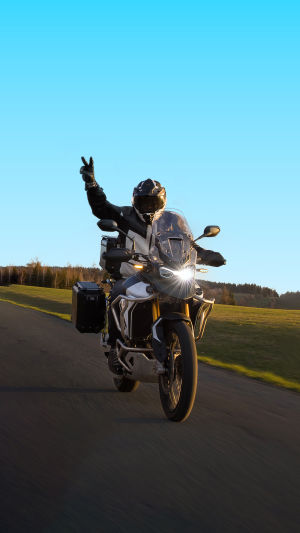
You know that thrill when the engine roars to life and the open road stretches ahead? Riding a motorcycle is freedom in motion, but it also demands focus, skill, and awareness.
Even experienced riders can improve by refining techniques that make every ride safer and more enjoyable. Here's a detailed guide to help you ride smarter, control your bike better, and handle common challenges on the road.
<h3>Proper Body Positioning</h3>
<b>Keep a relaxed posture</b>: Tension makes handling harder. Keep your elbows slightly bent, shoulders relaxed, and grip firm but not tight on the handlebars.
<b>Use your core</b>: Lean with the bike, not against it. Your body weight should shift naturally into turns while keeping your head up and eyes focused on the path ahead.
<b>Actionable tip</b>: On a twisty road, practice leaning into curves gradually. Start with slow turns in an empty parking lot to get a feel for the coordination between your body and the bike.
<h3>Smooth Braking Techniques</h3>
<b>Front and rear brakes together</b>: Using both brakes simultaneously allows balanced stopping power. Avoid slamming the front brake, which can cause skidding.
<b>Gradual pressure</b>: Apply brake pressure progressively instead of abruptly. This gives you more control and avoids unsettling the bike.
<b>Actionable tip</b>: Practice emergency stops at low speeds in a safe area. Time how long it takes to stop from 20 mph while keeping control, and gradually increase your confidence.
<h3>Cornering and Leaning</h3>
<b>Look through the turn</b>: Focus on where you want to go, not on obstacles. Your bike naturally follows your gaze, making steering smoother.
<b>Lean angle management</b>: Lean with the bike, not excessively with your body. Small adjustments help maintain traction and stability.
<b>Actionable tip</b>: Mark cones or visual points on a quiet road and practice taking curves with a controlled lean. Note how small shifts in body position affect the bike's balance.
<h3>Maintaining Proper Speed and Spacing</h3>
<b>Keep safe distances</b>: Always maintain space in front of you for sudden stops. Tailgating reduces reaction time and increases accident risk.
<b>Adjust speed to conditions</b>: Wet roads, gravel, or uneven pavement require slower speeds and cautious throttle control.
<b>Actionable tip</b>: On wet surfaces, roll on the throttle gently and avoid abrupt braking. Test your bike's handling in a controlled setting to feel the difference.
<h3>Anticipation and Awareness</h3>
<b>Scan the environment</b>: Continuously check mirrors and scan for pedestrians, cars, and road hazards. Anticipating problems before they happen keeps you in control.
<b>Blind spot management</b>: Make small head movements to check blind spots and avoid lingering there, especially when changing lanes.
<b>Actionable tip</b>: Practice the “two-second rule” for following distances in urban traffic and extend it to four seconds in poor conditions. This gives you extra reaction time.
<h3>Regular Bike Maintenance</h3>
<b>Check tires and brakes</b>: Proper tire pressure and brake function are critical for safe riding. Inspect daily or at least before long trips.
<b>Fluid levels and lights</b>: Engine oil, coolant, and lights must be in optimal condition to prevent breakdowns or accidents.
<b>Actionable tip</b>: Keep a simple pre-ride checklist: tires, brakes, lights, fluid, and chain tension. This habit saves time and prevents surprises on the road.
Riding a motorcycle is a blend of skill, awareness, and instinct. By focusing on posture, braking, cornering, speed management, anticipation, and maintenance, every ride becomes safer and more enjoyable. The road will always have surprises, but prepared riders can navigate them with confidence and control, turning every journey into a rewarding experience.


