

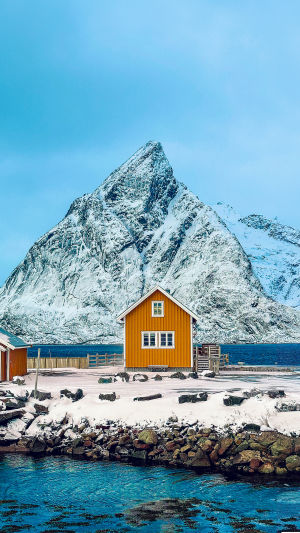
Tucked above the Arctic Circle, the Lofoten Islands are one of Norway’s most breathtaking destinations—where jagged mountains rise straight from the sea, colorful fishing villages cling to the shoreline, and nature shapes everyday life.
Despite their remote feel, the islands are surprisingly accessible and offer a mix of adventure, culture, and quiet moments that feel worlds away from modern bustle.
Whether you’re hiking dramatic ridgelines, paddling through calm Arctic waters, tasting freshly caught seafood, or watching the northern lights shimmer across the sky, Lofoten invites travelers to slow down and experience the raw beauty of northern Norway. Here’s how to get there and what to explore once you arrive.
The Lofoten archipelago stretches across northern Norway, accessible by plane, ferry, or car. The quickest route is flying into Leknes or Svolvær airports, with local carriers offering flights from Oslo or Bodo, typically costing $150–$200 USD per person.
If you prefer driving, take the ferry from Bodo to Moskenes; the scenic ride lasts about three to four hours and offers incredible views of the surrounding fjords and small islands. Renting a car once you arrive is highly recommended, as it gives freedom to explore tiny villages, beaches, and hidden hiking trails at your own pace.
<h3>Iconic Fishing Villages</h3>
Lofoten is dotted with charming fishing villages like Reine, Henningsvær, and Å. These villages showcase traditional red and yellow rorbuer—fishermen's cabins—some of which are now converted into guesthouses. Staying in a rorbu costs around $120–$180 USD per night, providing a cozy, authentic experience with sea views. Morning walks through these villages reveal the daily life of local fishermen unloading cod or halibut. If you're there between January and April, you might witness stockfish drying on wooden racks—a centuries-old preservation method still practiced today.
<h3>Hiking and Outdoor Adventures</h3>
Lofoten's rugged terrain offers hiking options for all levels. The Reinebringen trail is one of the most popular, with a steep 450-meter climb rewarded by panoramic views of the fjords and villages below. Expect a 2–3 hour round trip for moderately fit hikers. Other routes, like the Ryten hike leading to Kvalvika Beach, take about four to five hours and traverse varied terrain, from rocky slopes to coastal meadows. Always check weather conditions before hiking; sudden changes are common, and proper gear—including sturdy boots, waterproof layers, and trekking poles—is essential.
Kayaking is another excellent way to experience the islands, with rental options starting at $70 USD for a half-day. Paddling through sheltered bays and under towering cliffs offers a unique perspective of the coastline and abundant wildlife, including sea eagles and seals.
<h3>Beaches and Northern Lights</h3>
Although the islands are far north, Lofoten features surprisingly scenic beaches. Haukland and Uttakleiv beaches are renowned for their white sand and turquoise waters, framed by dramatic mountains. Summer visitors can enjoy mild temperatures, while winter brings the chance to see the aurora borealis dance across the sky. For northern lights photography, remote beaches away from village lights are ideal. Planning your visit between September and March increases the likelihood of clear, dark skies suitable for aurora spotting.
<h3>Local Cuisine and Dining</h3>
Lofoten is famous for fresh seafood. Restaurants in villages like Henningsvær serve cod, stockfish, and Arctic char, often priced between $25–$40 USD for main courses. Try a local café for smoked fish sandwiches or traditional fish soup. Visiting the fishing docks in the morning allows you to witness the freshest catch coming in, giving context to the flavors on your plate.
For a more hands-on experience, some local farms and fisheries offer guided tasting tours, costing around $50 USD per person, which include explanations of fishing methods, preservation techniques, and the cultural significance of seafood in this region.
<h3>Practical Tips for Travelers</h3>
Book accommodations well in advance, especially in summer, as Lofoten is a popular destination.
Bring layers; even in summer, winds can be chilly, and weather changes rapidly.
Fuel stations are sparse outside major villages—plan your drives and refuels carefully.
Photography enthusiasts should carry extra batteries; cold weather drains power quickly.
Respect wildlife; maintain distance from nesting birds and marine mammals to avoid disturbing them.
<h3>Reflection</h3>
Exploring Lofoten feels like stepping into a painting, with peaks, fjords, and villages perfectly composed across the landscape. By immersing yourself in both outdoor adventures and local life, you gain an understanding of how people have adapted to these dramatic environments over centuries. Whether you're hiking, kayaking, or watching the northern lights, the islands reward curiosity and attention to detail. Take the time to wander quiet streets, listen to the waves, and notice subtle seasonal changes—these small observations often become the most memorable parts of the journey. Next time you plan a northern getaway, consider dedicating a few extra days to fully embrace the islands' beauty and culture.


