

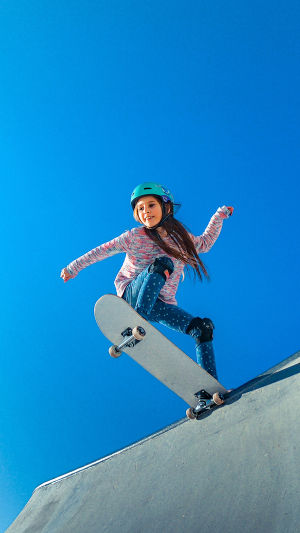
A smooth stretch of pavement, the quiet rattle of wheels, and a skater bending their knees before lifting into the air—skateboard jumps often look effortless when performed well.
Yet anyone who has tried to lift a board cleanly off the ground knows it takes more than courage. Timing, body position, and board control all play a role in making a jump stable and repeatable.
Learning to jump on a skateboard usually begins with one foundational movement—the ollie— and gradually expands into more complex tricks. By focusing on body mechanics and consistent practice, skaters can turn a simple lift into a more confident and controlled skill.
“Try to land with both feet over the bolts of your trucks and your body over the center of the board to maintain your balance.” — Skatedeluxe Skateboard Trick Guide.
<h3>Understanding the basic jump movement</h3>
<b>1. The pop from the back foot</b>
The first key element of a skateboard jump is the “pop.” This happens when the back foot presses sharply down on the tail of the board. The tail strikes the ground, creating an upward rebound that helps lift the board. Without a clear pop, the board will struggle to leave the ground.
<b>2. Sliding the front foot upward</b>
As the tail pops, the front foot slides upward along the deck toward the nose. This motion helps level the board while it rises into the air. The sliding action also stabilizes the board so that both wheels lift evenly.
<b>3.Bending the knees for lift</b>
Strong knee movement is essential. Skaters begin by bending their knees before the jump, which stores energy in the legs. As the pop occurs, extending the legs helps lift the body upward while the board follows beneath the feet.
<h3>Improving balance during airtime</h3>
<b>1. Centering body weight</b>
Many beginners lean too far forward or backward when attempting a jump. Keeping the shoulders roughly aligned over the center of the board helps maintain balance while airborne. Balanced posture allows the board to remain level.
<b>2. Keeping the board close</b>
During the jump, lifting the knees slightly helps keep the board close to the feet. This prevents the board from drifting downward too quickly and gives the skater more control during the landing phase.
<b>3. Relaxed upper body</b>
Tension in the shoulders and arms can disrupt balance. Experienced skaters keep their upper body relaxed while allowing the legs to handle most of the movement. Small arm adjustments help maintain stability in the air.
<h3>Landing smoothly and safely</h3>
<b>1. Absorbing impact with knees</b>
A controlled landing depends on flexible knees. As the wheels touch the ground, bending the knees helps absorb impact and maintain balance. Landing with stiff legs often leads to wobbling or loss of control.
<b>2. Keeping feet over the bolts</b>
Placing the feet near the bolts—the metal hardware that attaches the trucks to the deck—provides the strongest support points during landing. This position spreads weight evenly across the board.
<b>3. Rolling away steadily</b>
After landing, maintaining forward movement helps stabilize the board. Rolling away smoothly is a sign that the jump was properly balanced from start to finish.
<h3>Practicing jumps with consistency</h3>
<b>1. Starting on flat ground</b>
Beginners benefit from practicing jumps on flat, open pavement before attempting obstacles. A smooth parking area or empty court provides enough space to repeat the motion safely.
<b>2. Repeating small jumps</b>
Rather than aiming for height immediately, practicing smaller jumps helps build muscle memory. Even lifting the board a few centimeters off the ground repeatedly strengthens control.
<b>3. Watch experienced skaters carefully</b>
Watching skilled skateboarders can reveal useful details such as foot placement, timing, and posture. Many skaters improve by studying these movements and then practicing them step by step.
Skateboard jumps often appear as quick flashes of motion—a brief lift, a moment of silence in the air, and wheels touching down again. Behind that short moment lies hours of repetition, balance practice, and patience. Each attempt teaches something new about timing and control. Over time, what once felt impossible becomes a natural movement, and the quiet satisfaction of landing a clean jump keeps many skaters coming back to the pavement again and again.


