

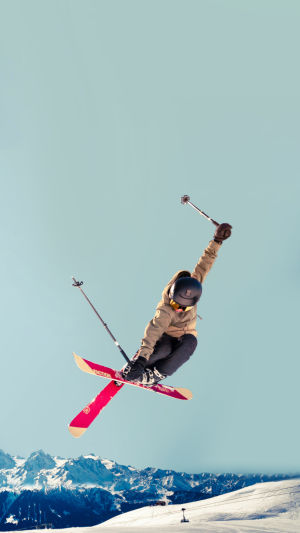
Have you ever watched an expert snowboarder carve effortlessly down a steep slope, launching off jumps and spinning through the air with precision?
The combination of speed, balance, and control is mesmerizing, and it inspires riders to push beyond the basics.
For snowboarders who have mastered the fundamentals, advancing to more complex techniques requires focus, practice, and an understanding of both body mechanics and terrain.
<h3>Refining Your Core Skills</h3>
<b>Perfecting carving and edge control</b>
Advanced snowboarding relies on precise edge control. Carving involves using the snowboard's edges to maintain speed and direction while turning. Riders refine this skill by practicing on different slopes, adjusting body lean, and shifting weight smoothly to maintain fluid movements and prevent catching an edge.
<b>Balance and posture</b>
Maintaining a low, centered stance allows for better stability on variable terrain. Experienced snowboarders focus on bending knees, keeping shoulders aligned with the board, and distributing weight evenly between both feet. This posture improves control during turns, jumps, and landing tricks.
<b>Speed management</b>
Advanced snowboarding requires confidence in controlling momentum. Riders learn to accelerate on steeper slopes, decelerate for obstacles, and use turns to regulate speed efficiently. Practicing controlled runs ensures safety while allowing for more dynamic movements.
<h3>Jumping and Aerial Maneuvers</h3>
<b>Ollies and nollies</b>
An ollie lifts the snowboard off the snow using a tail pop, while a nollie lifts it from the nose. Mastering these basic aerial movements enables snowboarders to approach jumps with precision, preparing them for spins, grabs, and more complex tricks.
<b>Spins and rotations</b>
From 180s to 720s, spinning requires timing, coordination, and spatial awareness. Riders focus on initiating rotation with shoulders and hips, keeping knees bent for control, and spotting the landing to complete the trick safely. Repetition on small jumps or trampolines with a snowboard simulator can build confidence.
<b>Grab techniques</b>
Grabs involve holding the snowboard mid-air, adding style and control. Common grabs include the Indy, Melon, and Tail Grab. Practicing each variation on small jumps first helps riders combine rotation and grab execution before attempting larger aerial tricks.
<h3>Rail and Box Tricks</h3>
<b>Basic slides</b>
Sliding on rails or boxes requires balance and edge precision. Start with simple boardslides and lipslides on low boxes to understand weight distribution and board angles. Progress gradually to longer or higher rails to improve confidence and control.
<b>Advanced grinding combinations</b>
Combining spins with rail slides increases trick complexity. For example, a 270 onto a rail followed by a 180 off demands precise rotation and timing. Practicing each component individually before combining them reduces risk and enhances performance.
<b>Safety and spotting</b>
When attempting rail tricks, helmets, padded shorts, and wrist guards are essential. Visualizing the movement and focusing on balance help riders maintain control and prevent injuries.
<h3>Off-Piste and Terrain Park Techniques</h3>
<b>Powder and variable snow</b>
Riding in deep powder or uneven terrain challenges balance and edge control. Advanced riders adjust stance, shift weight more dynamically, and anticipate snow variations to maintain speed and stability.
<b>Jumps in terrain parks</b>
Terrain parks offer features like kickers, hip jumps, and halfpipes. Riders approach each with proper speed, crouched posture, and focus on landing technique, ensuring consistent performance across multiple features.
<b>Creative line selection</b>
Advanced snowboarding is about flow and creativity. Riders choose unique lines down slopes, connecting jumps, turns, and rails smoothly. This approach transforms a descent into a personal expression of skill and style.
Mastering advanced snowboarding techniques requires patience, practice, and a willingness to challenge limits while respecting safety. Each jump, carve, or grind is an opportunity to refine control, balance, and style. As you progress, the mountain becomes not just a place to ride, but a canvas to express skill, creativity, and confidence on a snowboard.


