

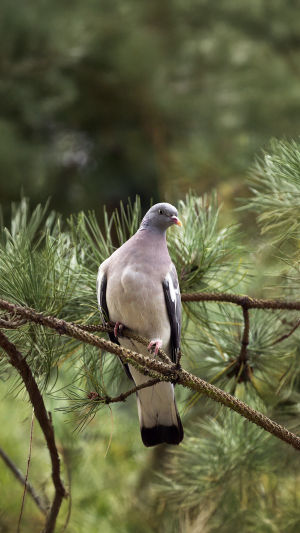
Have you ever walked through a busy city street or a quiet park and noticed pigeons constantly nodding as they move? These little city birds bob their heads up and down in a way that seems almost hypnotic.
At first, we might think it’s just a quirky habit, but if we look closer, we’ll see it’s actually a clever trick pigeons use to keep their vision stable.
By understanding this behavior, we get a small glimpse into the smart ways nature equips animals to handle daily life.
<h3>Why Do They Nod?</h3>
Pigeons’ head-bobbing is not random. When they walk, their heads move in a steady up-and-down rhythm, which scientists call “nodding.”
This motion helps them keep their vision steady despite the movement of their bodies. Imagine trying to read a sign while bouncing up and down—things would blur unless you stabilized your eyes. That’s essentially what pigeons are doing naturally. Nodding allows them to clearly see what’s around them, from food on the ground to nearby humans or other birds.
<h3>Understanding Pigeon Vision</h3>
Pigeons’ eyes are located on the sides of their heads, giving them a wide perspective but slightly narrower focus compared to humans. Despite this, their vision is incredibly sharp.
They can detect small changes in their environment almost instantly, whether it’s a shadow moving or a leaf falling. The head-bobbing helps them make the most of this keen eyesight. Each nod aligns their gaze so that the world remains clear and balanced, even as they move through uneven terrain or crowded streets.
<h3>How Nodding Helps the Eyes</h3>
The head movement of pigeons works a bit like a built-in stabilizer. When a pigeon nods, its eyes move just enough to keep the surroundings in focus.
This allows pigeons to cover more area visually without losing clarity. For example, if a crumb of food falls nearby, a pigeon can spot it quickly because its vision is not shaken by walking. Nodding also helps pigeons track fast-moving targets, like insects flying past or other birds darting around. Essentially, the nodding gives pigeons a “steady camera” view of their world.
<h3>The Brain Connection</h3>
Scientists have discovered that nodding is linked to the pigeons’ nervous system. Neurons in their brains control the precise movement of their heads, optimizing how the eyes process visual information.
This means head-bobbing isn’t just a habit—it’s an intelligent behavior developed over generations to help pigeons survive and navigate efficiently. Their brains are wired to make each nod purposeful, turning a simple motion into a survival tool.
<h3>Everyday Survival</h3>
We might see pigeons pecking for crumbs or dodging people on the sidewalk and think it’s just ordinary behavior. But in reality, each step and head-bob is carefully coordinated.
Nodding allows pigeons to react quickly to changes around them, avoid danger, and locate food efficiently. It’s a subtle example of how animals adapt to urban environments, using small yet effective strategies to thrive in places humans dominate.
<h3>Learning From Pigeons</h3>
Observing pigeons closely can teach us a lot about attention and awareness. These small birds remind us that even simple actions, like walking, can involve complex adaptations. Next time we see a pigeon nodding down the street, we can appreciate the intelligence behind its movements. Nature often hides clever tricks in plain sight, and pigeons are a perfect example of this hidden wisdom.
<h3>Why We Should Pay Attention</h3>
By noticing such small details in everyday life, we deepen our connection with the world around us. Pigeons are more than cute city dwellers—they are living examples of adaptation, showing us how even minor behaviors can serve important purposes.
So, Lykkers, the next time we spot a pigeon nodding along the sidewalk, let’s pause and admire its sharp vision, its clever brain, and the quiet wisdom in its tiny daily movements. Nature is full of surprises, and even something as simple as a pigeon’s nod can teach us to observe, learn, and appreciate the little wonders around us.


