

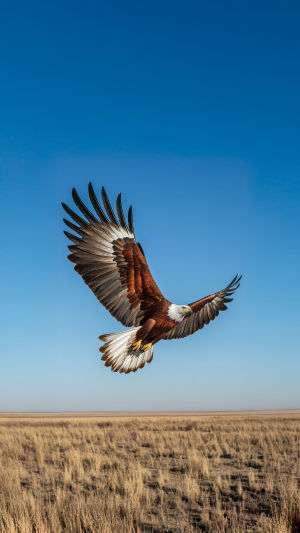
Watching a bird slice through the sky, it's easy to forget that its flight is powered by something delicate yet incredibly strong: feathers.
Among these, flight feathers are the true marvels of natural engineering, combining lightweight structure with precise functionality to enable gliding, soaring, and rapid maneuvers.
<h3>Primary Flight Feathers</h3>
Primary feathers are the long feathers at the outer edges of a bird's wing. They generate forward force during flapping, allowing the bird to propel forward with precision and speed.
<b>Key details:</b>
These feathers have asymmetrical vanes, with a narrow leading edge and wider trailing edge, optimizing airflow and lift.
When damaged, birds can still fly, but efficiency drops significantly. Observing a hawk in the wild, you can notice subtle adjustments in wing motion to compensate for missing primaries.
Hobbyists can gently examine molted primary feathers to understand the variation in length and stiffness, which differ between species based on flight style.
Maintaining these feathers is crucial for energy-efficient flight, which is why birds invest significant time in preening to keep them aligned.
<h3>Secondary Flight Feathers</h3>
Secondary feathers are attached closer to the bird's body and help create lift. Unlike primaries, They don't generate forward force but are vital for sustained flight and gliding.
<b>Practical insight:</b>
Birds like eagles and swans rely heavily on secondaries for long-distance soaring, using minimal energy while covering large areas.
The arrangement of these feathers forms an airfoil, balancing the forces of lift and gravity.
In rehabilitation centers, injured birds often need support while regrowing damaged secondaries, showing just how critical they are to stable flight.
Observing wing shape adjustments during gliding reveals the subtle contribution of each secondary feather to aerodynamics.
<h3>Tail Feathers and Steering</h3>
Tail feathers act like rudders, helping birds steer, brake, and maintain balance. They play a crucial role during takeoff, landing, and agile maneuvers.
<b>How they work:</b>
By spreading or folding tail feathers, birds control lift distribution and air resistance.
Species like falcons and woodpeckers use tail fanning to make sudden turns mid-flight.
Even small changes in tail feather alignment can dramatically influence speed and direction, which is why tail damage often leads to clumsy landings.
Understanding tail feather function highlights the intricate balance between wing and tail in aerial navigation.
<h3>Feather Structure and Composition</h3>
Each flight feather is composed of a central shaft, barbs, and interlocking barbules. This architecture gives feathers both flexibility and rigidity, allowing them to bend under pressure without breaking.
<b>Structural features:</b>
The shaft (rachis) provides backbone support, tapering toward the tip for lightweight strength.
Barbs form the flat vane surface, while barbules hook together like tiny Velcro strips to maintain integrity.
Birds preen to reconnect barbules, ensuring feathers remain aerodynamic and smooth, essential for efficient flight.
This natural engineering demonstrates how lightweight materials and interlocking structures create strength without excessive weight.
<h3>Takeaway for Observers</h3>
Flight feathers are more than just decoration—they are finely tuned tools for survival. From primaries generating forward force to secondaries creating lift and tail feathers steering, every part contributes to a bird's ability to soar, glide, and maneuver.
Watching birds in flight becomes even more fascinating when you realize how each feather, perfectly maintained, plays a role in navigating the skies with grace and precision. Appreciating this can inspire anyone interested in biology, aviation, or simply the marvels of the natural world.


