

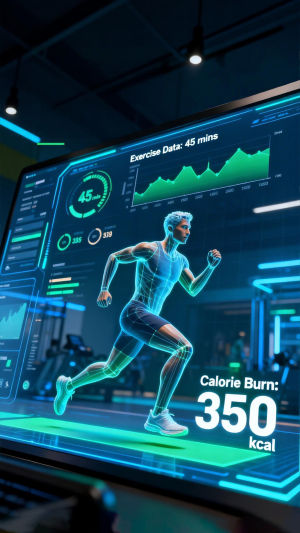
In a world awash with data, translating numbers into meaningful insights has become essential to guiding scientific exercise and holistic health management.
Data visualization bridges the gap between raw information and human understanding by converting complex datasets into intuitive visual narratives.
This powerful transformation allows professionals and individuals tracking their own progress to identify patterns, measure outcomes, and make evidence‑based decisions with clarity and precision. Effectively visualized data does not merely inform; it catalyzes action by revealing trends that are otherwise obscured in spreadsheets or dense reports.
<h3>The Role of Visualization in Scientific Exercise</h3>
Scientific exercise research often produces large and complicated datasets. Variables such as training load, resting recovery markers, motion metrics, and response patterns generate multidimensional information that can be overwhelming without a visual component. By presenting these variables graphically through line graphs, heat maps, scatter plots, and interactive dashboards — researchers can quickly observe how changes in one metric relate to others. This fosters faster hypothesis testing and more accurate interpretations of cause‑and‑effect relationships.
For example, visual comparison of training intensity over time can reveal correlations between specific regimens and performance improvements. Patterns that would require extensive textual explanation become instantly apparent when mapped visually, enabling scientists to fine‑tune exercise protocols with greater precision.
<h3>Supporting Personal Health Management Through Visual Feedback</h3>
Beyond research, visualized data plays a vital role in personal health management. Wearable sensors, mobile applications, and smart platforms continually gather data on movement frequency, rest cycles, nutrition patterns, and physiological responses. While numbers alone can be difficult to interpret, visual representations such as progress charts and interactive summaries allow individuals to see meaningful trends at a glance.
These visual tools help clarify how routine habits affect long‑term outcomes. When activity levels over weeks are charted against rest quality or energy metrics, users can more easily understand the relationship between consistent behavior and functional resilience. This empowers more informed choices and encourages sustained engagement with healthy practices.
<h3>Enhancing Understanding and Decision‑Making</h3>
Human perception is inherently visual; the brain processes images much faster than text or digits. Effective visual presentation taps into this cognitive advantage, enabling viewers to spot anomalies, outliers, and emerging trends without exhaustive analysis. In scientific and health contexts, this means faster identification of areas needing intervention and better strategic planning.
For instance, a heat map displaying variations in metabolic response over consecutive training sessions immediately highlights where performance gains plateau or regress. Clinicians, researchers, and individuals can then adjust plans proactively, based on clear visual evidence rather than inference alone.
<h3>Visualization Tools for Health and Exercise Data</h3>
Technological advancements have made visualization tools more accessible and sophisticated. Platforms like interactive dashboards enable users to explore datasets dynamically — zooming into specific timeframes, comparing variables, or generating customized views tailored to specific goals. These tools are especially valuable in multidisciplinary research, where collaboration hinges on shared understanding across domains.
Integrating interactive charts with predictive modeling allows stakeholders to forecast outcomes and simulate different scenarios. This capability enhances both preventive planning and responsive adaptation, whether the focus is optimizing training cycles or managing health markers associated with recovery and function.
<h3>Addressing Complex Patterns With Clarity</h3>
Complex health and exercise data often involve multiple interrelated factors. Distilling relationships between these variables requires careful visualization design. Good visuals emphasize relevant patterns while minimizing distractions, making it easier to draw reliable conclusions. Interactive interfaces further empower users to manipulate views and focus on the most meaningful correlations for their context.
Visualized information also supports storytelling — enabling researchers and practitioners to communicate findings effectively to diverse audiences. Clear, engaging visuals help bridge the gap between technical insight and practical application, facilitating shared understanding among professionals and laypersons alike.
Edward Tufte, a leading figure in information design, highlighted the importance of clarity in scientific visualization, explaining that graphical excellence involves presenting meaningful data effectively through a balance of content, statistical integrity, and thoughtful design.
<h3>Visualization’s Role in Continuous Improvement</h3>
Visualized data supports iterative refinement in both research and personal health management. Observing trends across time helps reveal what works and what does not. In exercise science, this might involve comparing outcomes from different training methodologies or evaluating how rest patterns influence performance markers. In personal health contexts, individuals may use visual summaries to identify behavioral tendencies that correlate with desirable or undesirable outcomes.
Through repeated visualization and reflection, patterns emerge that guide better decision‑making. Insights gained through this process contribute to improved resilience, smarter adaptation to change, and sustained commitment to long‑term goals.
Data visualization empowers users to transform complex datasets into actionable insights that enhance scientific exercise research and everyday health management. As technology continues to evolve, the integration of visual analytics into scientific practice and personal wellness will remain a cornerstone of informed and proactive health strategies.


