

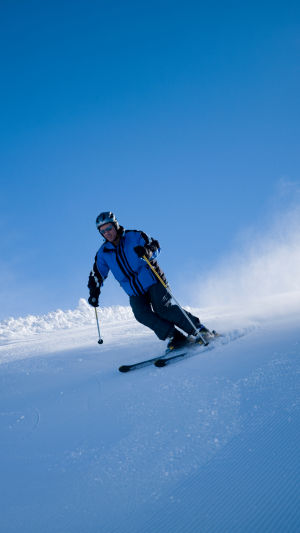
There's something satisfying about gliding straight down a slope, feeling the snow beneath your skis and knowing every movement is smooth and controlled.
Yet for many beginners, even small wobbles can turn that thrill into anxiety.
Mastering straight-line stability transforms skiing into a flow experience where speed and balance feel effortless.
<h3>Establish a Solid Stance</h3>
The foundation of straight-line skiing is your stance. Without proper posture, even minor pushes can throw you off balance.
<b>Practical steps:</b>
- Keep your feet shoulder-width apart for stability.
- Bend your knees slightly and lower your hips to absorb terrain changes.
- Lean forward slightly, keeping your weight over the balls of your feet rather than the heels.
Actionable tip: On a gentle slope, practice standing still and shifting your weight from one ski to the other. This develops subtle balance control needed for smooth straight glides.
<h3>Focus on Weight Distribution</h3>
Balanced weight distribution prevents skis from sliding outwards or crossing. Proper weight control allows your skis to track straight naturally.
<b>Practical steps:</b>
- Keep your core engaged to maintain upright posture.
- Distribute weight evenly on both skis, but be ready to shift slightly forward when going faster.
- Avoid leaning to one side or twisting your hips.
Actionable tip: Use small forward-and-back movements while gliding slowly to feel how weight affects your ski alignment. Adjust until your skis follow a straight line without effort.
<h3>Engage Your Edges Subtly</h3>
Edges control friction and direction. Beginners often overuse them, causing skids or unintended turns. Using edges lightly keeps your line steady.
<b>Practical steps:</b>
- Keep skis flat initially to start gliding straight.
- Apply a slight inward pressure with both inner edges to maintain control.
- Avoid pressing too hard; excessive edge use can tip skis sideways.
Actionable tip: On a mild slope, mark a straight path with cones or poles and practice keeping your skis on that line using only minimal edge adjustments.
<h3>Coordinate Arms and Poles</h3>
Arms and poles aren't just for pushing—they help balance and alignment. Proper coordination keeps your upper body from twisting, which can disrupt your glide.
<b>Practical steps:</b>
- Hold poles slightly forward and to the side for subtle balance support.
- Keep elbows bent and shoulders relaxed.
- Let your arms move naturally with your rhythm without overcorrecting.
Actionable tip: Glide along a straight path focusing solely on arm and pole position. Adjust until your arms feel like an extension of your balance rather than a correction tool.
<h3>Control Your Speed Gradually</h3>
Speed amplifies instability. Going too fast before mastering straight glides often results in wobble or fear. Start slow and increase gradually as control improves.
<b>Practical steps:</b>
- Begin on a gentle slope at low speed, focusing on smooth movement.
- Increase glide distance gradually while maintaining the same posture.
- Use small snow plows or friction with edges to control minor speed spikes.
Actionable tip: Pick a visual target down the slope and aim to reach it in one continuous glide. Focusing on the target helps your body instinctively correct small deviations.
<h3>Practice Consistently</h3>
Straight-line stability develops best through repetition and mindful practice. Short, focused sessions are more effective than occasional long runs.
<b>Practical steps:</b>
- Dedicate 10–15 minutes each session to straight-line drills.
- Mix glides at varying speeds and slight slope angles.
- Track progress by noting glide distance without corrections or wobbles.
Actionable tip: Film a few runs and compare over time. Noticing subtle improvements in posture and line helps reinforce muscle memory and confidence.
Gliding straight is more than a technique—it's a mindset of control and awareness. Each adjustment in stance, weight, and rhythm adds to fluidity and confidence on the slope. With patience and practice, straight-line skiing becomes second nature, turning each descent into a smooth, exhilarating experience that feels effortless from start to finish.


