

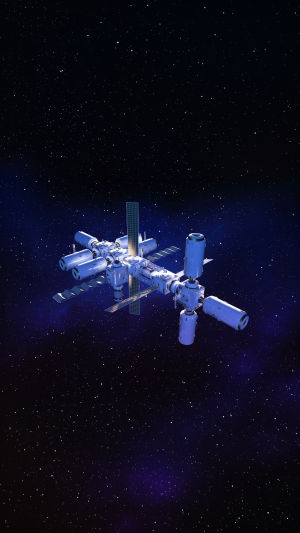
The International Space Station (ISS) didn't appear overnight. Imagine assembling a complex puzzle while orbiting Earth at 17,500 miles per hour.
Each module, bolt, and wire had to fit perfectly, often hundreds of miles above the planet. For astronauts, engineers, and scientists, the ISS represented both a technical challenge and a dream of continuous human presence in space.
<h3>Planning a Global Collaboration</h3>
Before a single module launched, decades of planning went into the ISS. Governments, space agencies, and private companies had to agree on technical standards, timelines, and roles. Some countries contributed specific components, from laboratories to solar panels. Coordinating across time zones, languages, and engineering cultures was a logistical feat.
<h3>Launching and Assembling Modules</h3>
The first ISS module, Zarya, launched in 1998. It provided initial power and guidance systems but no living quarters. Soon after, U.S. modules like Unity connected to it, forming the first nodes of a growing station. Astronauts had to conduct precise operations in microgravity, where even a small mistake could send tools or components floating away.
<b>Example:</b> During a 2000 spacewalk, astronauts installed the Quest airlock, allowing future excursions. They practiced extensively underwater on Earth to simulate weightlessness, refining movements and tool usage before heading into orbit.
<h3>Installing Solar Arrays and Power Systems</h3>
The station relies on massive solar panels to generate electricity. Deploying these arrays required careful timing and coordination. Panels stretch like wings, and a collision with the station or a micrometeoroid could cause significant damage. Engineers monitored angles, sunlight exposure, and power outputs to maximize efficiency.
<b>Example:</b> When astronauts installed the P6 truss segment in 2000, they manually guided solar arrays into position while tethered to the station, combining technical skill with teamwork to avoid mishaps.
<h3>Integrating Laboratories and Research Facilities</h3>
One of the main goals of the ISS is scientific research. Modules like Destiny, Columbus, and Kibo house laboratories for biology, physics, and Earth observation. Scientists on the ground remotely operate experiments while astronauts maintain equipment and collect data. Precision in installation ensures experiments function correctly and safely in orbit.
<b>Example:</b> The Kibo lab includes a robotic arm used to transfer experiments outside the station, allowing researchers to expose samples to space conditions without risking crew safety.
<h3>Maintaining Life Support and Safety Systems</h3>
Living in orbit requires continuous monitoring of air, water, and temperature. Life support systems circulate oxygen, remove carbon dioxide, and filter water. Regular maintenance and upgrades are necessary to prevent emergencies. Astronauts train for contingencies like depressurization, fires, or power failures.
<b>Example:</b> In 2008, a cooling system malfunction prompted a swift repair. Crew members followed step-by-step procedures from Earth-based engineers, successfully restoring normal operations without harming ongoing research.
<h3>Lessons Learned and Future Implications</h3>
Constructing the ISS taught humanity the value of patience, collaboration, and adaptability. Each successful assembly step built confidence for future projects, including lunar bases and Mars missions. Beyond scientific research, the ISS serves as a model for international cooperation in high-stakes engineering.
<b>Example:</b> Techniques developed for ISS assembly, like modular docking and remote operation, are now being applied to robotic missions and commercial space stations, enabling faster, safer deployment of orbital platforms.
The International Space Station stands as a testament to what humans can achieve when science, engineering, and global teamwork come together. Its construction shows that even in the harsh environment of space, meticulous planning and collaboration can turn ambitious ideas into tangible achievements, inspiring generations to look up and imagine what's possible beyond our planet.


