

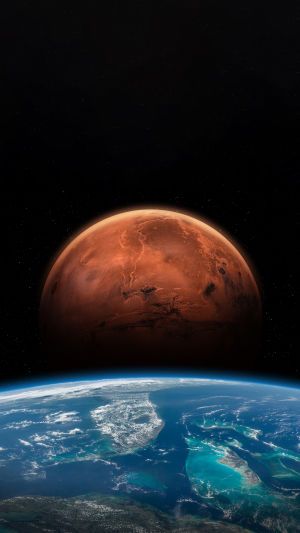
Mars, often called the Red Planet, has captured human imagination for centuries.
With its reddish hue and intriguing landscapes, it stands out in our solar system as a subject of endless curiosity.
Beyond its color, Mars holds numerous surprises, from colossal mountains to evidence suggesting water once flowed across its surface.
<h3>The Martian Landscape</h3>
Mars' terrain is as diverse as it is dramatic. Its surface is marked by volcanoes, valleys, and polar ice caps, offering clues about the planet's history.
<b>1. Olympus Mons</b> – The tallest volcano and mountain in the solar system, standing at nearly 22 km high, almost three times the height of Mount Everest.
<b>2. Valles Marineris</b> – A massive canyon system stretching over 4,000 km, roughly ten times longer than the Grand Canyon.
<b>3. Polar Ice Caps</b> – Seasonal ice layers of water and carbon dioxide expand and shrink, creating unique surface patterns observable from space.
These features showcase Mars as a dynamic planet with extreme and fascinating geography.
<h3>The Atmosphere and Climate</h3>
Mars' atmosphere is thin, mostly carbon dioxide, and dramatically different from Earth's. Understanding its climate is crucial for both exploration and potential human habitation.
• Surface temperatures can range from -125°C near the poles to 20°C in equatorial regions during summer.
• Frequent dust storms can engulf the planet, lasting for weeks and reducing sunlight across vast areas.
• The thin atmosphere creates an environment where liquid water cannot remain stable on the surface, yet past evidence indicates it once existed.
These harsh conditions make Mars an extreme environment, challenging yet intriguing for scientists and explorers.
<h3>Signs of Water</h3>
Water is key to life, and Mars' history hints at its watery past.
<b>1. Ancient Riverbeds</b> – Satellite images reveal dry channels resembling river systems.
<b>2. Mineral Deposits</b> – Minerals that form in water, such as clay and sulfate, have been detected on the surface.
<b>3. Seasonal Flows</b> – Dark streaks appear on slopes during warmer months, suggesting briny water may flow intermittently.
These findings fuel speculation about whether Mars could have supported life in the past.
<h3>Exploration and Robots</h3>
Human curiosity has led to an era of robotic exploration, unlocking Mars' secrets remotely.
• Rovers such as Curiosity and Perseverance analyze soil, rock, and atmospheric conditions in real time.
• Orbiters like Mars Reconnaissance Orbiter map surface features with extraordinary precision.
• Ingenuity, the helicopter, demonstrates powered flight on another planet, opening doors for aerial exploration.
Robotic missions provide essential insights and prepare the way for eventual human visits.
<h3>Reflections on Mars</h3>
Mars is more than just a distant red dot in the night sky—it is a world of extremes, mysteries, and possibilities. Its dramatic landscapes, harsh climate, and tantalizing evidence of water challenge our understanding of life beyond Earth. Studying Mars inspires curiosity, fuels innovation, and reminds us of the vastness and wonder of the universe. Each discovery brings us closer to understanding not just a neighboring planet, but our place among the stars.


