

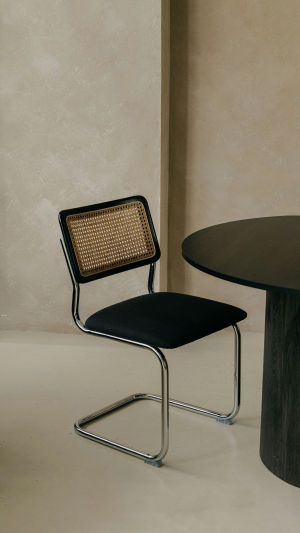
You find the perfect chair online. The proportions look right, the material is exactly what you had in mind, and the color photographs beautifully against a neutral wall.
It arrives, and when you place it in the room, something is immediately wrong. The chair is too low for the table, too large for the corner, or simply fighting with everything around it in a way that is hard to articulate but impossible to ignore. The chair did not change. The room did not change. The problem was the decision — made without enough information about how the two would actually interact.
Choosing a modern chair for a room that already has character is one of the more nuanced decisions in interior design. It requires thinking about proportion, material, color, and function simultaneously — and getting any one of them wrong tends to undermine the others.
<h3>Start With Proportion Before Anything Else</h3>
Proportion is the variable that causes the most visible problems when it is wrong, and the one most commonly underestimated when shopping from a screen. A chair that looks appropriately sized in a product photograph — typically shot in a large, empty studio — can feel enormous in a real room with existing furniture, architectural features, and a ceiling that is not twelve feet high.
Before considering style or color, measure the space the chair will occupy. Note the ceiling height, the distance from other furniture pieces, and the visual weight of what already exists in the room. A low-slung lounge chair works beautifully in a room with other low-profile furniture and generous floor space. In a smaller room with traditional proportions and taller existing pieces, the same chair reads as an awkward interruption rather than a considered addition.
Seat height deserves particular attention. Standard seat height runs between 17 and 19 inches from the floor. If the chair will be used at a desk or dining table, the seat height needs to correspond to the table height. If it is a standalone lounge chair, seat height affects how the chair visually relates to sofas and side tables around it.
<h3>Match the Material to the Room's Existing Surfaces</h3>
Modern chair design makes extensive use of materials that were not available to earlier generations of furniture makers — molded plastic, tubular steel, bent plywood, and formed foam beneath a wide range of upholstery options. Each of these materials carries its own visual weight and surface quality, and each interacts differently with the materials already present in a room.
1. Molded plastic chairs — particularly those with a shell form — work well in rooms with hard, reflective surfaces like concrete floors, glass, or lacquered cabinetry. They add visual lightness and complement the industrial or minimal aesthetic those surfaces suggest.
2. Wooden frame chairs with upholstered seats bridge the gap between warmth and modernity. In a room that combines natural materials like timber or stone with cleaner contemporary lines, a wooden-frame modern chair connects both directions without committing entirely to either.
3. Metal frame chairs — whether powder-coated steel or polished chrome — suit rooms with a more industrial or urban character. They tend to read as cooler and more assertive, which works well as a deliberate contrast in a warm, textile-heavy room but can feel harsh if the room already leans cool.
3. Fully upholstered modern chairs add softness and acoustic absorption to hard-surfaced rooms. In open-plan spaces with minimal soft furnishings, an upholstered chair serves a functional role beyond providing a place to sit.
<h3>Use Color to Complement Rather Than Compete</h3>
A modern chair in a strong color can function as a deliberate focal point — but only if the room has enough visual calm around it to let that focal point read clearly. In a room that already contains multiple competing colors or patterns, adding a strongly colored chair creates noise rather than interest.
The more reliable approach in most rooms is to use the chair's color to pull from something already present in the space. A chair in a warm terracotta that echoes a similar tone in a rug or artwork creates cohesion without requiring a matching set. A chair in a cooler sage green can balance a room that leans warm without clashing with the existing palette.
Neutral chairs — in cream, warm grey, or natural linen tones — offer the most flexibility but risk disappearing into a room that needs a stronger visual anchor. If the chair is intended to be a statement piece, neutrality works against that intention.
<h3>Consider the Function the Chair Actually Needs to Serve</h3>
A visually perfect chair that is uncomfortable to sit in for more than twenty minutes fails in any room where people actually spend time. Modern chair design sometimes prioritizes form over extended comfort, and it is worth being honest about how the chair will be used before committing to a purely aesthetic choice.
A reading chair needs lumbar support and armrests at a height that allows relaxed arm positioning over a long period. A dining chair needs a seat depth that suits the height of the table and allows comfortable sitting through a full meal. An accent chair that will primarily be looked at rather than sat in has more latitude for pure form — but even then, a chair that looks used and comfortable reads differently in a room than one that looks like it was placed there to be admired.
The right modern chair for a room is rarely the most dramatic or the most expensive. It is the one that makes the room feel complete — adding what was missing without disturbing what already works. Success requires measuring before ordering, considering materials before falling in love with a shape, and being honest about how the space will actually be used. The process takes longer than impulse buying, but the result, when done right, lasts much longer.


