

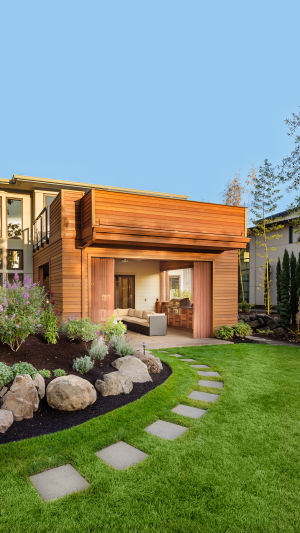
Forget the static drywall and the cold glass of traditional luxury; the Garden Residence is a biological machine designed to bridge the gap between human comfort and ecosystem dynamics.
It is a high-performance specimen of biophilic engineering, where the "SOP" of the household includes managing nutrient cycles and atmospheric humidity.
In a world of concrete "circuit breakers" that isolate us from nature, the Garden Residence acts as a conductor, synchronizing the building's thermal mass with the rhythmic transpiration of plants. To live here is to operate a home that is physically alive—a structural sanctuary where the architecture and the flora exist in a state of mechanical equilibrium.
<h3>The Hydro-Thermal Envelope</h3>
A Garden Residence is not just a house with plants; it is a system governed by fluid dynamics. The design utilizes "passive cooling" through a network of vertical greenery and interior courtyards that act as thermal chimneys.
The core of this mechanical specimen is the "Integrated Irrigation Circuit." Hidden within the structural columns, a greywater recycling system filters domestic output and delivers it via a precision-calibrated drip line to the root zones of the "living walls." This process creates a natural evaporative cooling effect, reducing the load on HVAC systems by up to 30%.
The air isn't just cooled; it is scrubbed of particulate matter by the foliage, creating a microclimate where the oxygen concentration is consistently higher than the exterior "urban exhaust."
<h3>Structural Specs for Living Green</h3>
Building a home that carries its own ecosystem requires a specialized engineering "SOP." You are not just supporting furniture; you are supporting tons of saturated soil and pressurized root systems.
<b>The Hardware of the Garden Residence</b>
• Load-Bearing Substrates: Conventional slabs won't suffice. The design requires reinforced concrete "trays" with a "root-barrier" membrane to prevent biological intrusion into the structural armature.
• Smart Drainage Grids: Every garden level must feature a secondary drainage layer of expanded clay pebbles or high-density plastic cells to prevent water stagnation and "anaerobic failure."
• Calibrated UV Glazing: Windows are treated with high-transparency, low-E coatings that allow the specific "photosynthetic spectrum" to reach the interior plants without causing excessive solar heat gain.
• Automated Nutrient Dosers: A central hub manages the pH levels of the irrigation water, injecting liquid nutrients to ensure the interior specimen remains in peak physiological condition.
<h3>Transitioning the Threshold</h3>
The "Garden Residence" philosophy dictates that the transition between "shelter" and "nature" must be a seamless gradient, not a hard fracture. This is achieved through the use of "threshold architecture"—large, cantilevered balconies and sunken gardens that blur the lines of the floor plan.
By using stone and wood that match the local geology, the interior feels like an extension of the earth. In a high-end specimen, the living room might feature a "sunken light well" where a single, centuries-old tree acts as the central pillar of the home. This isn't just for aesthetics; the tree provides "natural shading" and serves as a biological barometer, signaling shifts in the local microclimate through its seasonal cycles. The mechanical maintenance of such a home involves checking the moisture sensors in the soil just as often as the electrical panel.
<h3>The Wisdom of the Canopy</h3>
Living in a Garden Residence forces a shift in perspective. You are no longer a passive consumer of a space, but a symbiotic participant in its survival. If you neglect the irrigation, the "walls" fail; if you ignore the soil chemistry, the atmosphere of your home changes.
Reflect on your own "internal garden": Are you building a residence for your spirit that is made of cold, dead materials, or are you allowing the organic "vines" of connection and growth to permeate your structure?
The Garden Residence teaches us that true luxury is the ability to breathe clean air and touch wet earth within the safety of our walls. It reminds us that we are not separate from the ecosystem, but its most sophisticated stewards.
Are you ready to maintain the "SOP" of a living home, or are you still hiding behind the drywall, afraid of what the roots might do to your foundation? Success is found in the growth.


